
Types of Funerals in Switzerland: An Overview
In Switzerland, there are many ways to say goodbye. These range from a traditional cemetery burial to a natural burial and the scattering of ashes. This overview presents the main types of funerals and helps you find the right option. If the deceased did not express any specific wishes, the next of kin make the decision.

Many Ways to Say Goodbye.
From a cemetery funeral to a natural burial.
Burial
In a burial, the body is interred in a coffin. This is the traditional form and takes place in a cemetery. In Switzerland, burials in coffins are required to take place in a cemetery. Urn burials, on the other hand, offer significantly more flexibility, as the following sections will show.
Cremation
Cremation is now the most common form of funeral in Switzerland. The body is cremated, and the ashes are collected in an urn. Afterward, you have many options for what to do next: from burying the urn to keeping it at home to scattering the ashes in nature. This variety of options is what makes cremation so popular.
Urn Burial at the Cemetery
After cremation, the urn can be interred at the cemetery. There are several options for doing so.
In a row grave or family grave, the urn has a permanent, personal resting place. In an urn niche or columbarium, it is placed within a wall, often covered and easily accessible. In a communal grave, the ashes rest alongside others, frequently without individual headstones. This option is usually simple and is offered by many municipalities to their residents free of charge or at a low cost. Those who prefer a very low-key approach may choose an anonymous burial in a communal grave.
The specific types of graves available and their costs vary from municipality to municipality. The funeral office in your municipality can provide you with this information.
Natural Burial and Forest Burial
More and more people are choosing to say goodbye in nature. In a forest or tree burial, the ashes are interred near a tree in a forest designated for this purpose. Such resting places do not look like a cemetery, but rather like a well-maintained forest, without crosses, signs, or nameplates. A formal forest burial requires a permit under forestry law, and there are specialized providers that operate such sites in various cantons.
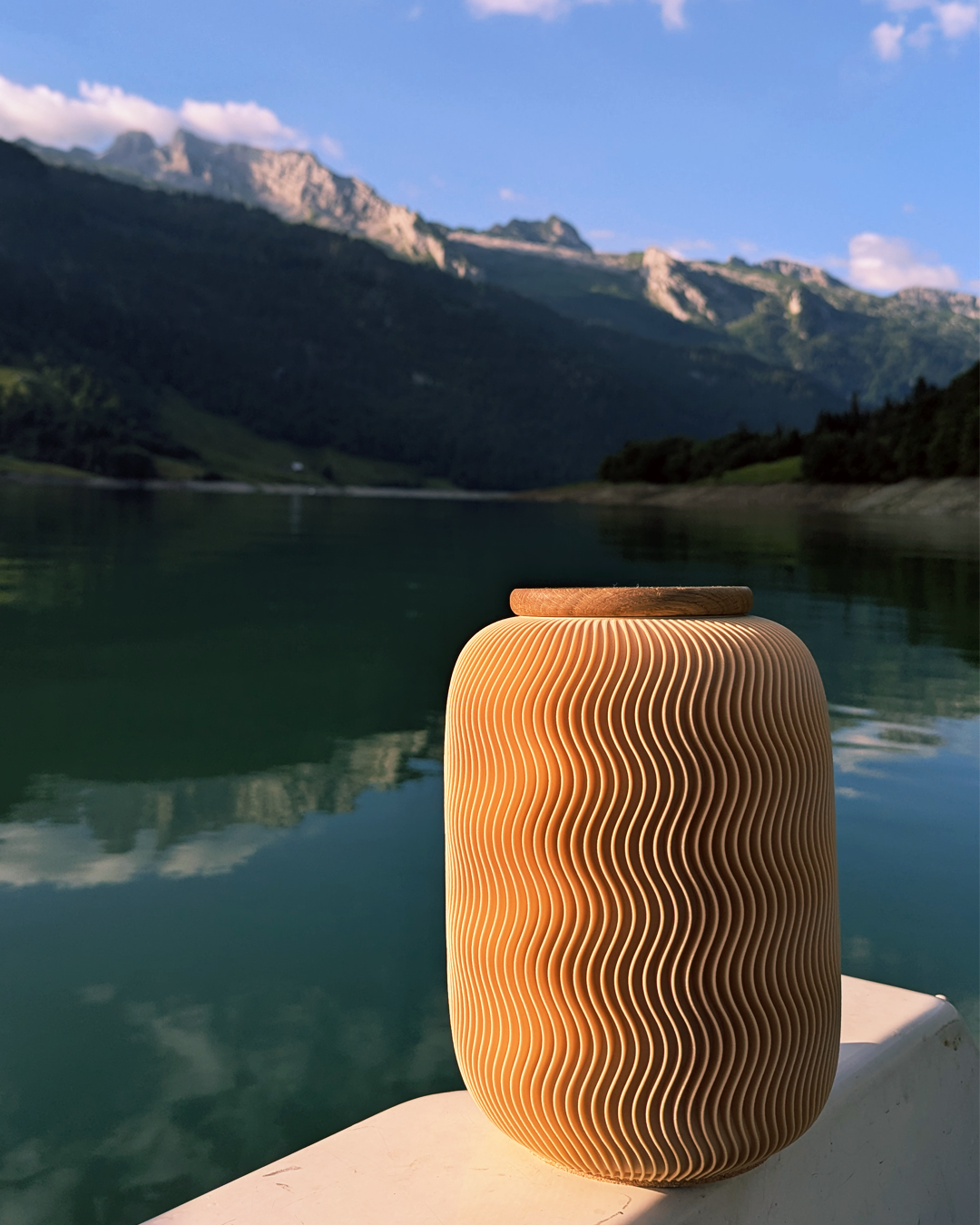
A farewell in nature.
For many, the most fitting place.
Ash Scattering
Instead of a burial, the ashes can also be scattered in nature—in the forest, on a mountain, near bodies of water, or in one’s own garden. Switzerland has very liberal rules regarding this, but cantonal and municipal regulations apply, along with certain restrictions. You can read about exactly what is permitted in the detailed article on scattering ashes in Switzerland. This includes burial at sea, in which the ashes are scattered over a lake or the ocean, and scattering from the air via hot-air balloon, airplane, or helicopter. Both are forms of scattering and are regulated differently depending on the canton.
Keeping the Urn at Home and Sharing the Ashes
In Switzerland, you are also allowed to take the urn home with you. Many people find comfort in having a place of remembrance in their own home. When the ashes are divided, they are distributed among several containers so that multiple family members can each keep their own memento. Some of the ashes can be buried, while others can be kept or scattered.

The "Mikro Nesuto" forget-me-not urn is inspired by the clean, straight lines of the "Nesuto" and designed in miniature form. It holds a small portion of the ashes and serves as a delicate keepsake for the home.
It’s ideal for dividing the ashes if you’d like to keep a small portion of them with you while the larger portion is buried or scattered. You can find more information in our guide to small urns and dividing ashes. Like all Farvel urns, the Mikro Nesuto is also made from biodegradable materials.
Material: Wood fibers and organic binder, supplemented with cork
Dimensions: Height 4.5 cm, width 3.4 cm, depth 3.4 cm
Capacity: up to 0.025 liters
Weight: 11 grams without lid
Memorial Diamonds and Memorial Jewelry
A small portion of the ashes can be used to create keepsakes, such as a memorial diamond or jewelry. This way, a memento stays close to you. It’s a very personal way to honor a loved one that works well with the division of ashes.
Which urn is right for which type of funeral?
The choice of urn depends on the type of funeral. For in-ground and natural burials, a biodegradable urn that blends into the surroundings is suitable. For storage at home or in an urn niche, it is important that the urn retains its shape permanently. Farvel urns are made of biodegradable wood fibers and can be used for burial in the ground as well as a keepsake at home, where they retain their shape for many years in a dry environment.
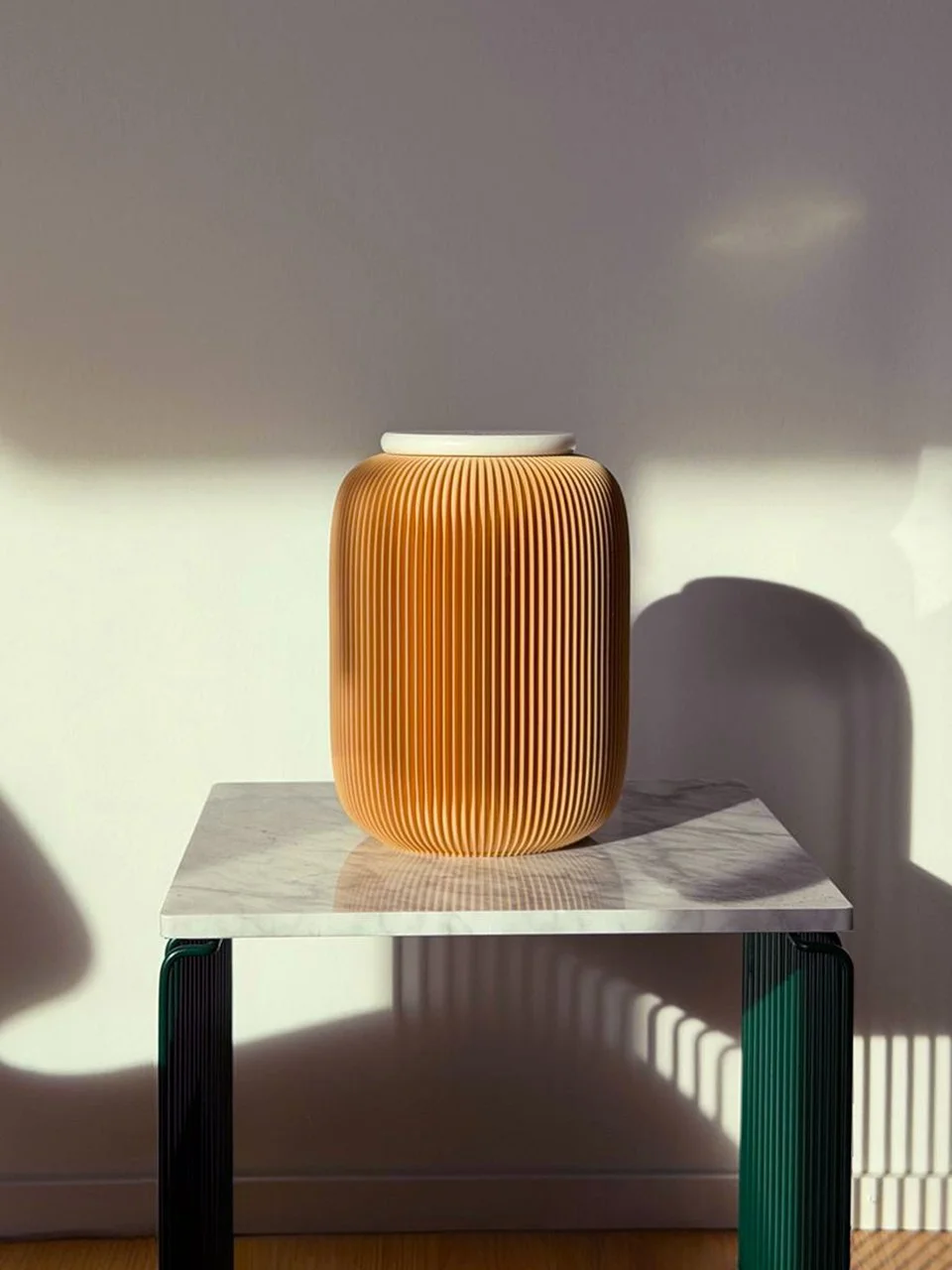
A keepsake for your home.
Retains its shape and is made from natural materials.
A Glimpse into the Future
The culture of saying goodbye continues to evolve, and new, nature-inspired ideas are constantly emerging. One of these is “re-earthment.” In this process, the body is transformed into fertile soil over several weeks with the help of microorganisms and plant-based materials such as wood chips and straw. A tree, for example, can later grow from this soil. For many people, this is a harmonious image of life and death.
In Switzerland, reburial is not yet permitted. However, various organizations are advocating for it to be recognized as a form of burial, and the issue is being discussed more and more. It remains to be seen whether and when this will change.
An SRF report offers a fascinating look at this development and the people who are working to make it happen.
Frequently Asked Questions
What is the most common type of funeral in Switzerland?
Cremation. It offers the most options for what to do with the ashes afterward.
Does an urn have to be buried in a cemetery?
No. In Switzerland, you are free to dispose of the urn as you wish. The cemetery requirement applies only to burials in a coffin.
What is a natural burial?
A farewell in nature, such as a forest or tree burial, or by scattering the ashes.
Can I keep the urn at home?
Yes. In Switzerland, it is common and permitted to keep an urn at home.
This is a general overview and does not constitute legal advice. Because many details are regulated at the cantonal and municipal levels, your municipality’s funeral office or your funeral home can assist you with specific questions.
Finding the Right Urn
No matter what kind of farewell you choose, you’ll find an urn that fits your needs in the Farvel collection. If you have any questions, we’re happy to help—email us at hallo@farvel.ch or call us at +41 79 700 05 45.